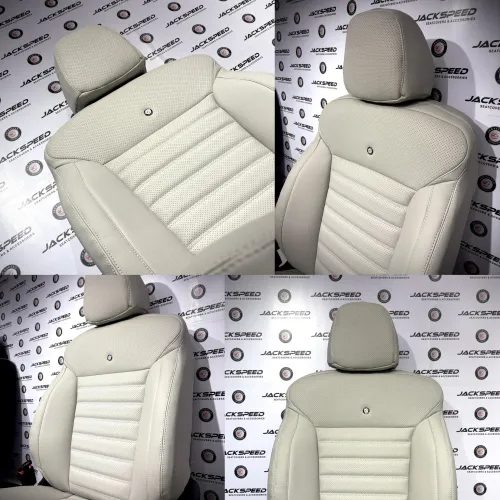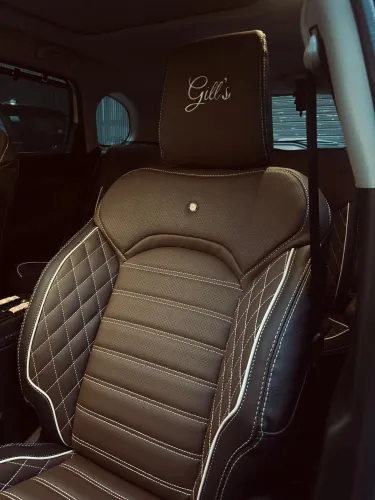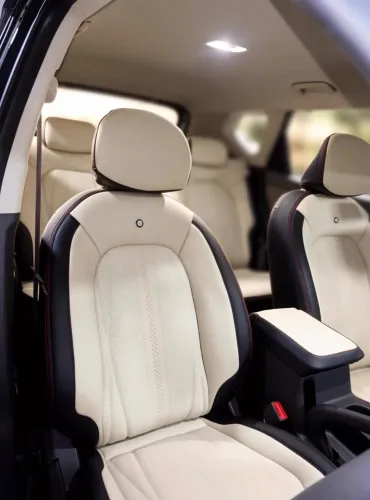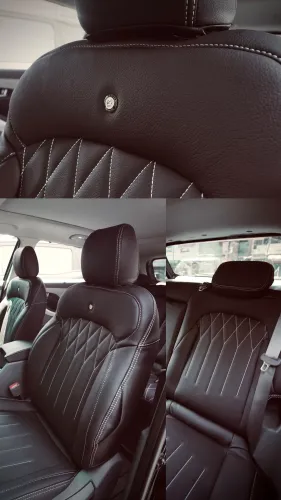
Customised seatcovers allow car owners to make deliberate choices about material, colour, stitching, fit, and overall cabin appearance. That flexibility is valuable, but it also means there are more decisions to get right.
For vehicle owners in Delhi, where cars face dust, intense summer temperatures, frequent traffic, and substantial daily use, a customized design should balance appearance with maintenance and functionality.
1. Start With the Exact Vehicle Variant
The make and model alone may not provide enough information.
Different variants can have different seat structures, airbags, armrests, headrests, adjustment mechanisms, and rear-seat folding arrangements.
A proper assessment of the actual vehicle reduces the risk of designing around the wrong configuration.
2. Check Airbag Locations
If the vehicle has seat-mounted side airbags, this needs to be identified before the cover is planned.
The seat-cover design and construction must take the relevant safety configuration into account. This is a functional requirement, not simply another customisation option.
3. Select Material for Real Usage
Think beyond the showroom appearance.
A car driven every day requires upholstery capable of handling regular entry and exit. A family vehicle may need relatively easy maintenance, while a car used less frequently may allow different priorities.
Delhi's climate also makes heat exposure and cleaning requirements practical considerations.
4. Coordinate With the Existing Interior
A seat-cover colour can look attractive in isolation but feel out of place once installed.
Look at the complete cabin
- Dashboard colour
- Door-pad finish
- Roof liner
- Original upholstery
- Floor mats
- Steering wheel
- Centre console
A coordinated combination often produces a more polished result than simply choosing the most noticeable colour.
5. Decide How Much Contrast You Want
Custom upholstery does not have to be visually loud.
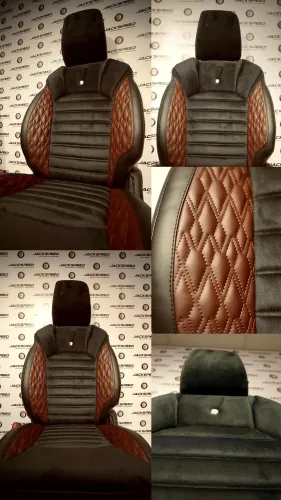
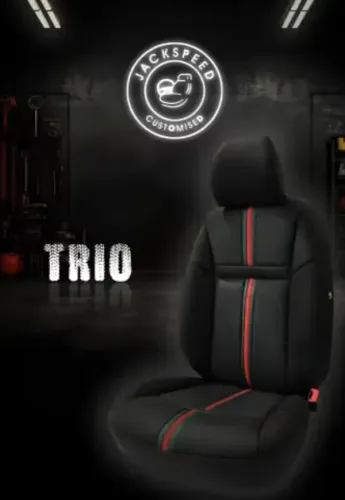
Some owners prefer a subtle single-colour design with understated stitching. Others choose contrasting panels, piping, or patterned sections.
The right level of contrast depends on the vehicle and personal taste. A restrained design may also remain visually relevant for longer.
6. Examine Stitching and Construction
Stitching affects both appearance and construction quality.
Look at whether lines are consistent and whether the design follows the seat contours naturally. Decorative stitching should complement the upholstery instead of appearing randomly placed.
Also consider areas that experience frequent friction, particularly the driver's outer seat bolster.
7. Preserve Original Seat Functions
A custom cover should accommodate the functional elements of the seat.
Depending on the car, these may include
- Recline controls
- Height adjustment
- Electric seat controls
- Headrests
- Armrests
- Rear-seat folding
- ISOFIX access
- Seat pockets
- Integrated airbags
Customisation should work around these features rather than obstructing them.
8. Consider Future Maintenance
Ask how the chosen surface should be cleaned before finalising it.
Light-coloured upholstery can create an airy premium appearance but may reveal dirt sooner. Darker shades may be easier to live with in some daily-use vehicles, although maintenance is still necessary.
Your decision should reflect how frequently the vehicle is used and who uses it.
9. Assess the Fit After Installation
The final stage matters as much as the design stage.
Check edges, contours, openings, headrests, controls, and seat movement after installation. The finished upholstery should look consistent without obvious loose sections or unnecessary bunching.
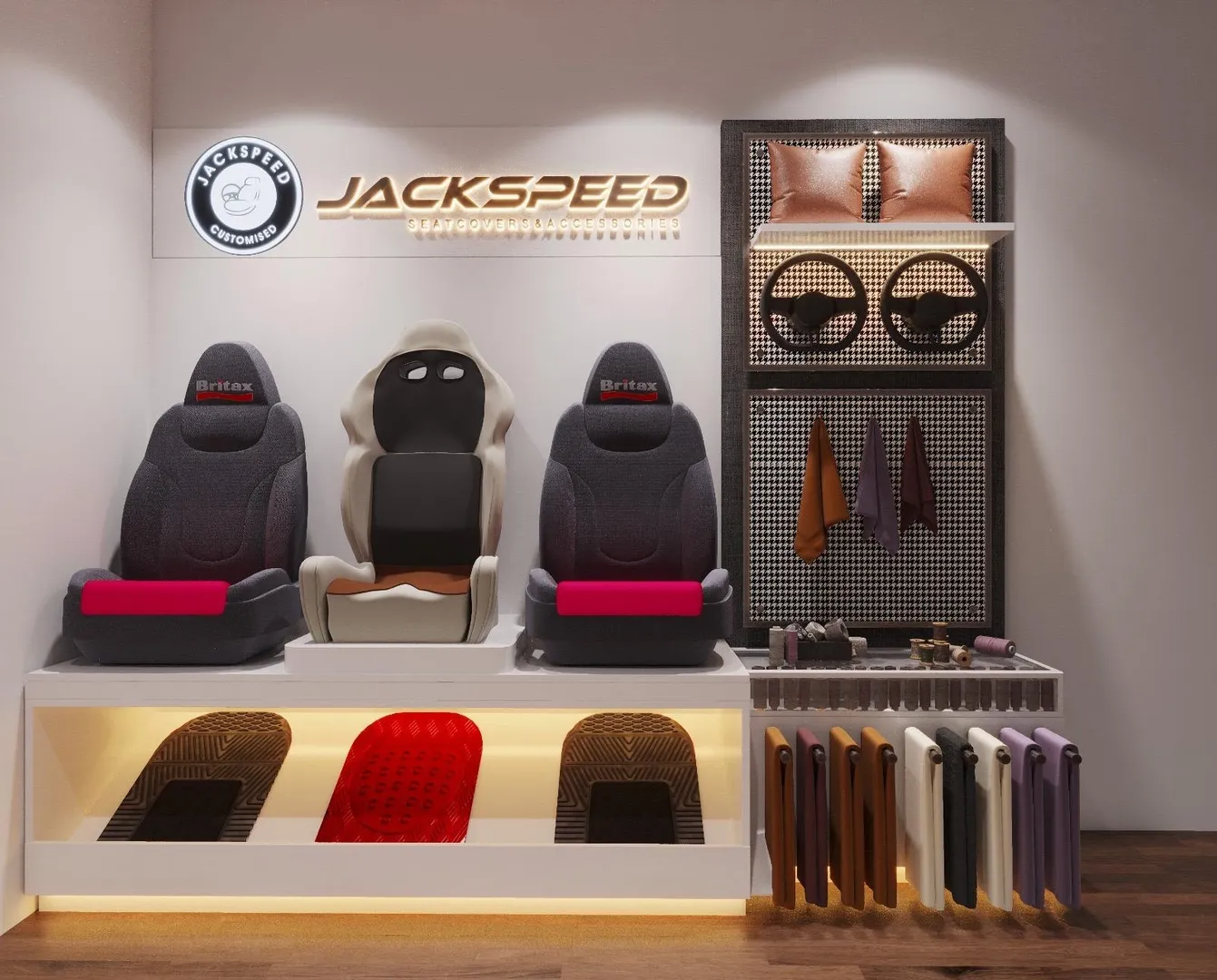
For car owners exploring customised interiors in Delhi, Jackspeed offers vehicle-specific seat-cover options where design choices can be considered alongside practical fit.
The strongest customised seatcovers are not merely decorative. They account for the actual vehicle, safety configuration, daily usage, climate, maintenance expectations, and cabin design. Taking time to check these details before installation can produce an interior that looks intentional and remains practical for everyday driving.
Keywords