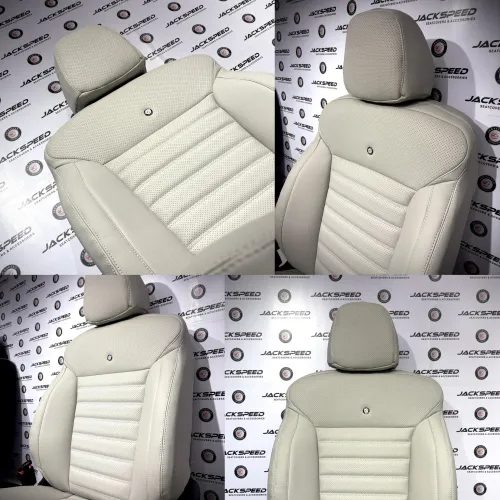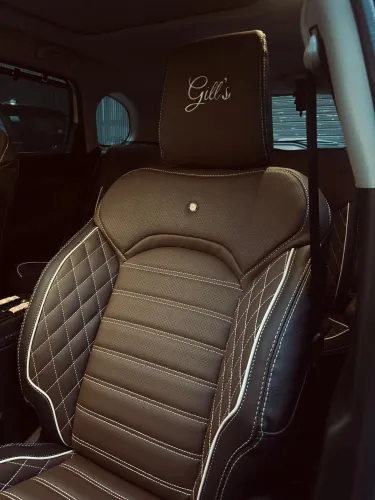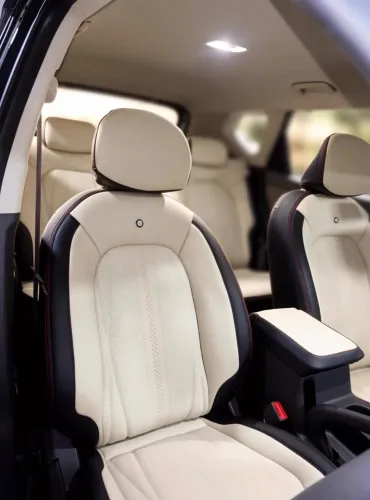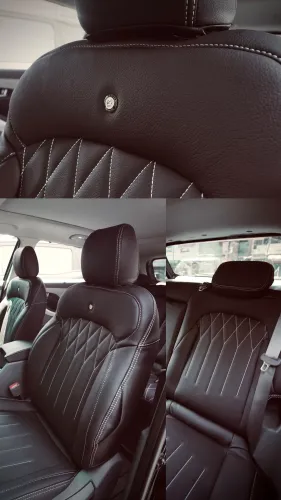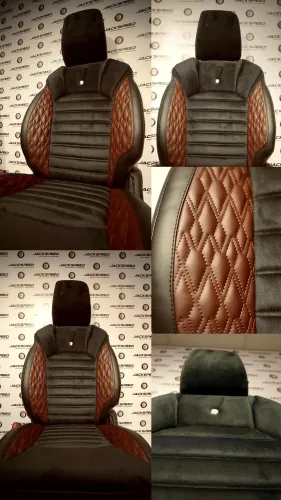
Delhi commuting exposes seat covers to repeated entry and exit, summer heat, sweat, road dust, pollution residue, monsoon moisture and food spills. By the end, you will know how to compare commuter-focused materials, confirm vehicle compatibility, inspect a safe installation and maintain the covers without trapping moisture or damaging the original seats.
Key takeaways
- Reinforce the driver-side entry edge against repeated friction and sliding.
- Confirm seat shape, headrests, controls and side-airbag paths before ordering.
- Check installation leaves belts, levers and seat-mounted airbags unobstructed.
- Dry covers completely after monsoon cleaning to prevent odour and mildew.
What Daily Delhi Driving Does to a Seatcover
Repeated entry and exit is the first test of a seatcover in Delhi. The driver-side bolster takes the most friction, while stop-start traffic adds sliding, twisting and pressure at every journey. Tight vehicle-specific fitting, firm grip and reinforced stitching at the entry edge prevent the cover from creeping or developing wrinkles.
Heat changes the comfort calculation. A dark, non-perforated leatherette or vinyl surface can become painfully hot after direct sun exposure; lighter colours and perforation reduce perceived heat. Breathable fabric handles sweat better on long summer trips, while smooth leatherette wipes food and drink spills faster.
Perforation is not automatically better: liquid and fine dust can enter its holes.
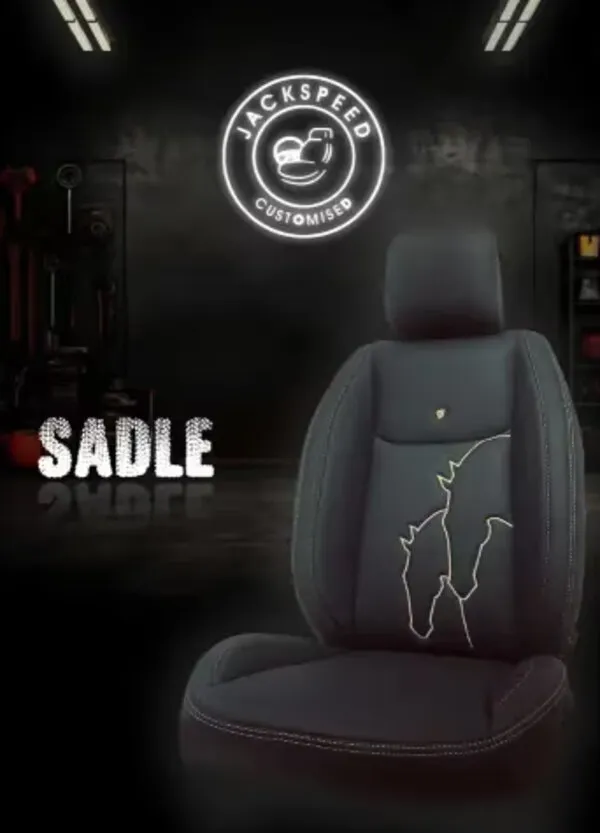
For sadle customised seatcovers for daily driving in delhi, check these daily-use details:
- Smooth, vacuumable surfaces and sealed edges limit grit retention from road dust and pollution.
- A washable or wipe-clean centre panel simplifies tea, food and drink cleanup.
- Rear armrest and cup-holder openings must remain usable after fitting.
- Monsoon moisture needs prompt drying; trapped dampness can create odour and affect the original upholstery.
Do not accept appearance as proof of safety. If the vehicle has seat-mounted side airbags, the cover needs the manufacturer-specified tear seam and model-specific pattern. Confirm that belt buckles, child-seat anchor points, recline levers, seat-height controls and folding mechanisms remain accessible; a cover that hides a buckle can discourage belt use.
Which Commuter Features Matter More Than Appearance
Compare customised seatcovers for commuters on access, cleaning and wear before choosing colour or embroidery. The most attractive cover is a poor fit if it shifts during entry, traps grit or hides a belt buckle.
| Feature | Better choice | Warning sign |
|---|---|---|
| Entry bolster | Reinforced stitching and firm grip | Seams flatten or slide after repeated exits |
| Central panel | Smooth woven fabric or wipe-clean coated material | Deep texture holds dust and sweat |
| Hot-weather comfort | Breathable fabric with moderate foam thickness | Thick, sealed padding feels hotter |
| Daily cleaning | Manufacturer-approved soap-and-water cleaning | Household bleach or solvent is needed |
| Rear-seat access | Openings for cup holders, armrests and split-fold mechanisms | The cover must be removed to fold the seat |
Check that the design preserves belt routing, buckle position, head-rest movement, recline levers, seat-height controls and child-seat anchor points. A hard-to-reach buckle can encourage passengers to travel unbelted.
Ask specifically about seat-mounted side airbags. The cover must not tightly wrap or block the deployment area; use the vehicle manual and a model-specific tear seam as the deciding standards. Decorative piping is never worth compromising this clearance.
This style is the wrong choice when the original seat is torn, badly compressed or structurally damaged, because a cover cannot restore crash performance. Avoid it too if the installer cannot confirm the pattern, airbag provision or cleaning method for your exact vehicle variant.
How to Confirm Fit, Access and Airbag Compatibility Before Ordering
Give the installer your vehicle’s make, model, model year, variant, seat count, and registration details before choosing a pattern. Add the front-seat shape, head-restraint design, rear-seat split ratio, folding arrangement, armrest position, and any rear cup-holder or centre-console openings.
- Confirm whether the front seats contain seat-mounted side airbags by checking the owner’s manual and the seat-side label.
- Ask for the model-specific airbag tear seam; a tight wrap or decorative stitching across the deployment area can delay or redirect the bag.
- Confirm access to ISOFIX anchors, top-tether points, seat-belt buckles, belt routing, recline levers, height controls, and seat-mounted electrical connectors.
- Check that rear seats still fold, split, and latch without pulling the cover out of position.
- Confirm whether the material is machine-washable or wipe-clean, and how it must be dried after monsoon use.
For SADLE customised seatcovers in Delhi, compare construction details rather than colour or embroidery alone.
| Feature | Vehicle-specific cover | Generic cover |
|---|---|---|
| Airbag area | Model-patterned tear seam | May block or tightly wrap the seat side |
| Rear seat | Matches split ratio and folding points | Can obstruct folding or leave loose fabric |
| Child-seat access | ISOFIX and top-tether openings remain reachable | Anchors may sit beneath the cover |
| Daily controls | Buckles, levers and connectors stay exposed | Access becomes awkward or hidden |
Before ordering, ask to see the actual stitching around the airbag seam, buckle openings, head restraints, and rear-seat split. A cover that makes a buckle difficult to reach is a safety problem, not a minor fit issue.
What Happens During Installation in Mayapuri
A proper installation takes hours, not minutes. The installer matches the vehicle, variant, seat shape and rear-seat split before removing anything; a slip-on cover that is fitted in minutes can still block folding hinges, ISOFIX points or side-airbag seams.
1. Confirm the work order. Check the make, model year, variant, seat count, head-restraint design, armrests, rear split ratio and seat-mounted side airbags. Ask whether any seat, wiring connector or trim panel must be removed.
2. Allow the car to remain at the workshop for several hours. It may need most of a working day if the technician removes seats or routes covers around occupancy sensors, pretensioners and folding mechanisms. Ask for a completion time before handing over the keys.
3. Inspect the actual stitching before payment. For custom car seat covers in mayapuri, compare the installed cover—not only the material sample—around the airbag tear seam, buckle openings, head restraints, ISOFIX access and rear-seat split. Test every seat adjustment, belt buckle, armrest and fold-down release.
If an airbag warning light appears, stop driving the car until the fault is diagnosed; do not hide it by disconnecting the battery. Jackspeed buyers should also check that the SADLE pattern is model-specific rather than accepting a generic fit.
Reject installation over torn or badly compressed original foam, since a cover improves protection and appearance but does not restore crash performance. Ensure the finished cover sits flat, does not slide, and is fully dry before refitting after cleaning.
Related product
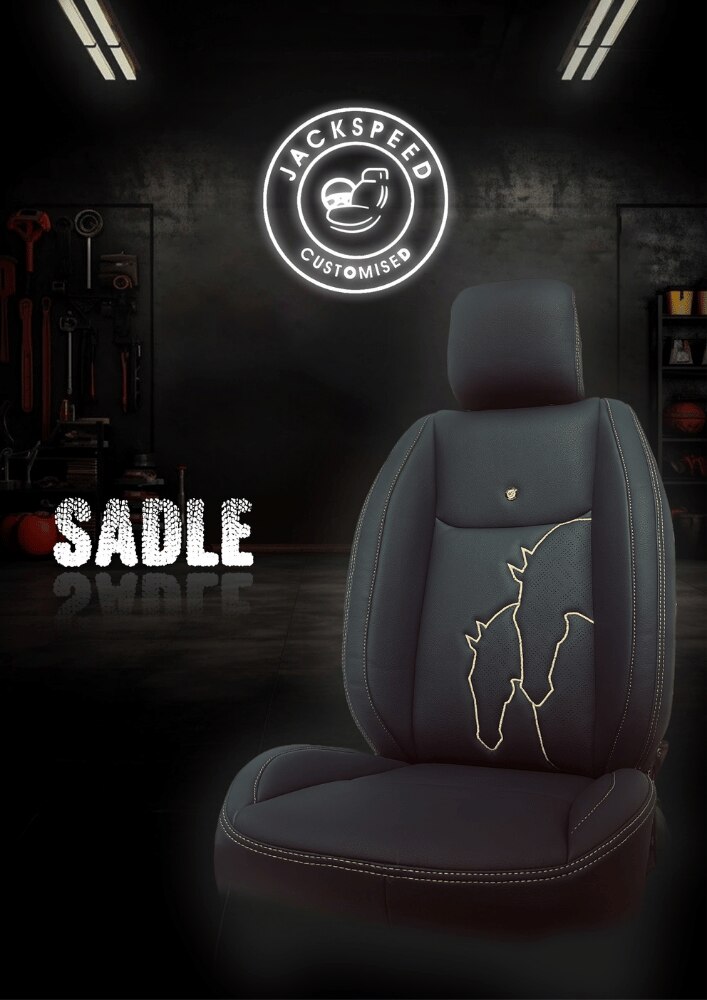 | Custom Car Seat Covers SADLE Customised Car Seat Covers Jackspeed SADDLE Customised Car Seat Covers offer a distinctive interior styling option for customers who want a bold and personalised vehicle cabin. View product → |
How to Clean and Dry Covers Through Delhi’s Seasons
Clean the covers weekly in summer, after any spill, and after a wet monsoon journey. Give them a deeper clean every four weeks; Delhi dust, sweat and pollution residue otherwise work into stitching and foam.
For sadle customised seatcovers for daily driving in delhi, use a soft vacuum brush, clean microfiber cloths and a pH-neutral upholstery cleaner. Test the cleaner beneath the seat first. Avoid bleach, ammonia, solvent, stiff brushes and excess water.
- Vacuum seams, bolsters and seat gaps before wiping; trapped grit acts like sandpaper during repeated entry and exit.
- Wipe with a lightly damp cloth, then remove cleaner residue with a second cloth.
- Follow the care label before machine-washing customised seatcovers for commuters; some covers are wipe-clean only.
- Remove wet covers promptly, dry both sides in moving air, and refit them only when the fabric and foam beneath feel completely dry.
| Method | Suitable use | Main caution |
|---|---|---|
| Vacuum and dry cloth | Weekly dust removal | Do not rub grit into the fabric |
| Damp microfiber and mild upholstery cleaner | Sweat, food and light stains | Do not soak the seat |
| Machine wash | Only when the care label permits | Skip high heat, which can shrink panels |
During monsoon, leave doors open in a shaded, ventilated area after cleaning. A wet cover fitted tightly over foam traps moisture, causing odour or mildew; inspect the underside and original seat before refitting.
Frequently asked questions
Which parts of a seatcover suffer most during daily Delhi driving?
The driver-side bolster and entry edge take repeated friction from getting in and out. Stop-start traffic adds sliding, twisting and pressure that can loosen a poor fit.
How do you check fit and airbag compatibility before ordering?
Confirm the exact vehicle model and seat layout, then check access to headrests, belts, levers, controls and any seat-mounted side-airbag openings. Do not accept a cover that blocks or tightly closes an airbag path.
What should you expect when installing custom car seat covers in Mayapuri?
The installer should match each cover to the vehicle seat, align seams and openings, secure the lower edges, and test seat movement, belts, controls and airbag clearance before handing the car back.
How should you clean seatcovers through Delhi’s seasons?
Vacuum grit first, use a cleaner suited to the cover material, remove residue with a damp cloth and dry every panel fully. Increase ventilation during monsoon cleaning to prevent trapped moisture and odour.
Keywords