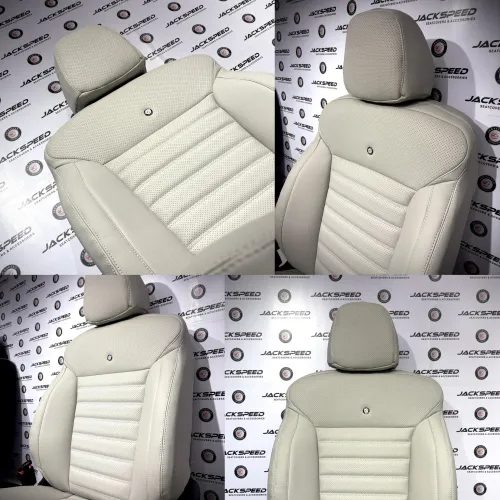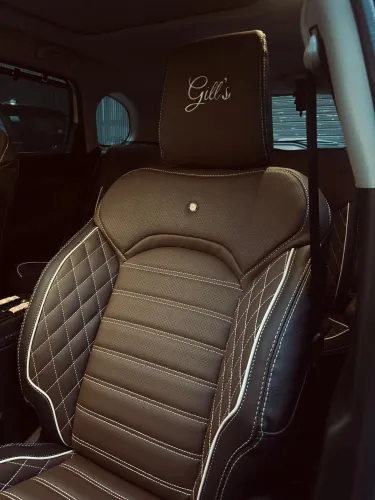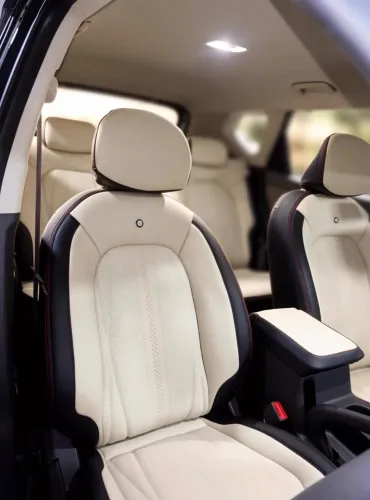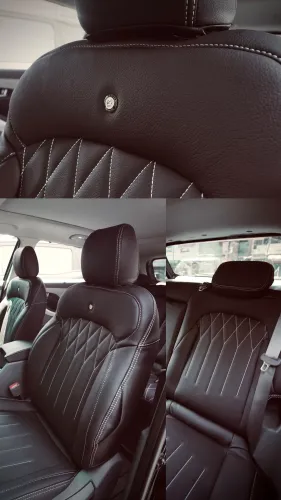
The choice depends less on the N LINE name than on material disclosure, seat compatibility and installation quality. By comparing upholstery types, checking airbag and seat functions, and testing the finished fit, you can decide whether the pattern suits your exact Delhi car or whether another custom solution is safer and more practical.
Key takeaways
- Confirm whether the quote covers reupholstery, fitted covers or universal slip-ons.
- Ask for material composition instead of accepting “leather” as a specification.
- Check airbag seams, seat controls, headrests and folding sections before payment.
- Choose breathable, securely fitted covers for Delhi heat, dust and daily traffic.
What are you actually buying: upholstery, fitted covers or a universal slip-on?
A full replacement upholstery job removes the factory seat skin and installs new upholstery on the foam. A vehicle-patterned cover fits over the original upholstery, following the seat’s bolsters, controls, headrests and folding sections. A universal slip-on uses broad shapes, so it is quicker but more likely to move, crease or obstruct access.
| Option | What you are buying | Main risk |
|---|---|---|
| Full replacement upholstery | New seat covering fitted after removing the original skin | Higher labour and installation time |
| Vehicle-patterned fitted cover | A shaped cover installed over the factory upholstery | Poor pattern or tension can alter seat function |
| Universal slip-on cover | A loose, broadly sized cover secured with straps, hooks or elastic | Loose fit, blocked controls and poor rear-seat folding |
An N LINE leather cover is a design and fitment choice, not proof of one standard material or one universal seat shape. The word leather also does not establish whether the product uses genuine leather, PU, PVC or leatherette.
Buying by appearance alone can leave you with a higher seating position, covered recline or height controls, trapped wiring, folds beneath your thighs, or a rear bench that no longer folds in its designed ratio. A glossy showroom finish proves little about fit.
Before comparing quotations for an n line leather cover or custom seat covers in delhi, confirm:
- Exact make, model and model year
- Body style and variant
- Front-seat shape, headrests and armrests
- Rear-seat split, centre armrest and folding mechanism
- Seat-belt buckle and ISOFIX or LATCH access
Ask the same questions when comparing custom car seat covers in delhi. Two covers carrying the same vehicle name can require different patterns.
How can you tell genuine leather from PU, PVC or leatherette in a Delhi quotation?
“Leather” is not a material specification. For a leather cover in delhi, ask the seller to name the construction, not merely repeat the word used in the quotation.
| Material | What it means | Practical trade-off |
|---|---|---|
| Full-grain leather | Top hide surface retained | Develops patina; needs compatible cleaning and conditioning |
| Top-grain leather | Surface lightly corrected | More uniform appearance, with less natural character |
| Corrected or split leather | Surface treated, or lower hide layer used | Finish and backing strongly influence wear |
| Bonded leather | Leather fibres bonded with resin | Can look like leather but does not behave like a full hide |
| PU or PVC leatherette | Synthetic polyurethane or polyvinyl chloride | Easier to wipe and colour-match; no genuine-hide patina |
Request these details in writing:
- Material name and leather grade
- Surface finish, grain pattern and protective coating
- Backing material and total thickness
- Written warranty, including peeling, cracking, fading and seam exclusions
- Abrasion-resistance test result, if claimed
- UV-resistance information for prolonged sun exposure
Perforation is a ventilation-versus-cleaning decision, not proof of premium quality. It can improve airflow across the seat, but each hole admits dirt and liquid and can tear when the backing is weak.
The label alone does not predict service life. Ask how seams are reinforced, whether the backing prevents stretching, and how the material is rated for abrasion and Delhi sunlight. PU and PVC simplify spill cleaning; genuine leather can age attractively, but the wrong cleaner can strip its finish.
Will an N LINE pattern fit your exact car and remain safe?
An N LINE pattern fits safely only after an installer matches it to your exact vehicle and seat layout. “N LINE customised car seat covers” are not automatically universal: model years, variants and body styles can use different seat shapes, airbag positions and rear-seat mechanisms.
Give the installer these details and require a physical check:
- Vehicle make, model, year, body style and variant
- Head-rest shape and height-adjustment openings
- Front-seat bolster shape, recline levers and seat rails
- Front armrests and centre armrest design
- Rear-seat split, fold-down ratio and release mechanism
- Seat-belt buckle positions and ISOFIX or LATCH anchor access
| Check | Correct match | Reject the installation if |
|---|---|---|
| Seat-mounted side airbag | A correctly positioned tear seam or manufacturer-approved airbag provision | The outer bolster is enclosed, restrained or stitched without an airbag provision |
| Passenger-occupant classification sensors | Original sensor areas remain free from thick foam, rigid backing and trapped objects | Wiring, pressure sensors or occupancy components are trapped |
| Heated or ventilated seats | Controls and perforated sections align with the original seat | Covers block controls or defeat ventilation |
| Electric seats | Full forward, backward, height and recline travel remains available | The cover catches on rails or limits movement |
Ask how the cover preserves the manufacturer’s airbag deployment path. Do not accept the car if the airbag, SRS or seat-occupancy warning light appears after fitting; remove the cover and have the system inspected before driving.
What should a proper custom-cover installation look like at handover?
At handover, a proper installation should look factory-shaped, operate every seat function, and leave no SRS warning. Use this sequence for custom car seat covers in delhi:
1. Confirm whether the installer removed a seat. Removal is appropriate when the cover must pass cleanly around rails, wiring, belt buckles or seat-mounted airbags; it must not trap a harness or pressure sensor. Ask to see that trim was refitted without gaps, scratches or loose clips.
2. Run your hand over the driver and passenger seats. The cover should follow the original contours, with even tension and no folds beneath the thighs or lower back. Reject thick quilting that creates pressure points, raises the seating position, or blocks a sensor.
3. Inspect each side-airbag tear seam, headrest opening and seat-belt opening. Check neat edge finishing, reinforced stitching around openings, smooth backing and adequate seam allowance. Loose material at a bolster will crease and wear quickly.
4. Operate the seat slide, recline, height adjustment and every electric movement through their full range. Test belt-buckle insertion and release, remove and refit each headrest, and confirm belts retract without rubbing the cover.
5. Fold the rear seat in every designed ratio. Open the ISOFIX or LATCH points and confirm their labels and anchor access remain clear.
6. Switch the ignition on and complete the final SRS-warning-light check. The light should perform its normal start-up check and go out; do not accept the car if an airbag, SRS or occupancy warning remains.
Which choice makes sense for Delhi driving and daily use?
Choose for the hours you spend driving, not for the colour scheme alone. An N LINE leather cover or custom seat covers in Delhi should be judged against Delhi heat, daily cleaning, exact fit and safe operation.
| Option | Strength | Check before ordering |
|---|---|---|
| N LINE | Consistent design if the pattern suits your car | Material construction, rear-seat layout and airbag provisions |
| Other custom solution | More choice of material, colour and ventilation | Pattern accuracy, warranty exclusions and installer quality |
Black or very dark upholstery becomes hotter after direct sun exposure. A lighter, breathable or perforated material can improve comfort, but perforations collect dust and require gentler, more careful cleaning. PU or PVC is usually easier to wipe after spills; genuine leather can develop patina but needs compatible cleaner and conditioner.
Compare written specifications for grain or synthetic material, coating, thickness, backing, seam construction and abrasion resistance. Also check warranty exclusions for fading, cracking, stains, perforation damage and installation-related faults. A leather cover in Delhi is not comparable with another quotation unless both specify the material.
For custom car seat covers in Delhi, confirm pattern availability for the exact rear split, folding mechanism, headrests, armrests and ISOFIX points. Before ordering from Jackspeed, ask the Mayapuri team to confirm material construction, vehicle-specific pattern availability, airbag provisions and post-installation function checks, including the SRS light, belts, seat movement and folding.
Choose N LINE when its documented fit and material meet your needs; choose another custom solution when the specification or safety provision remains unclear.
Related product
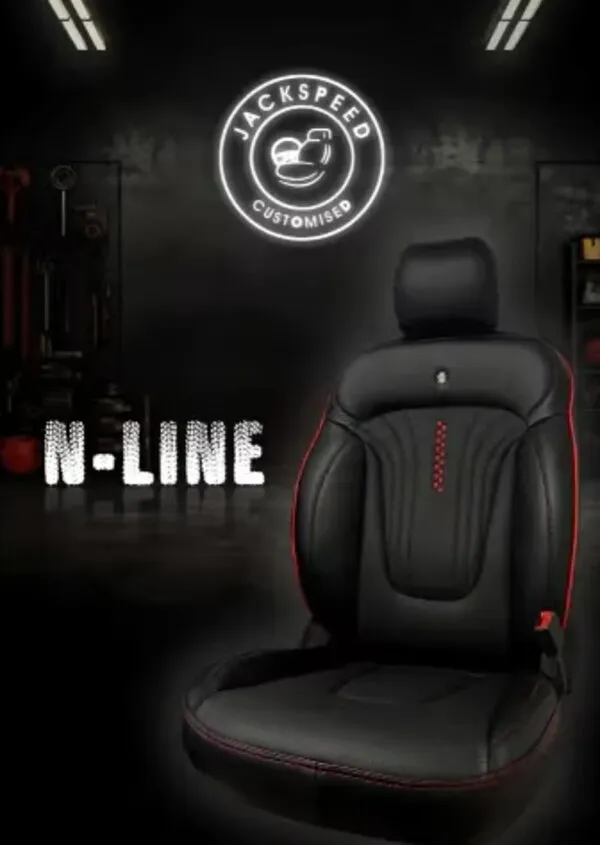
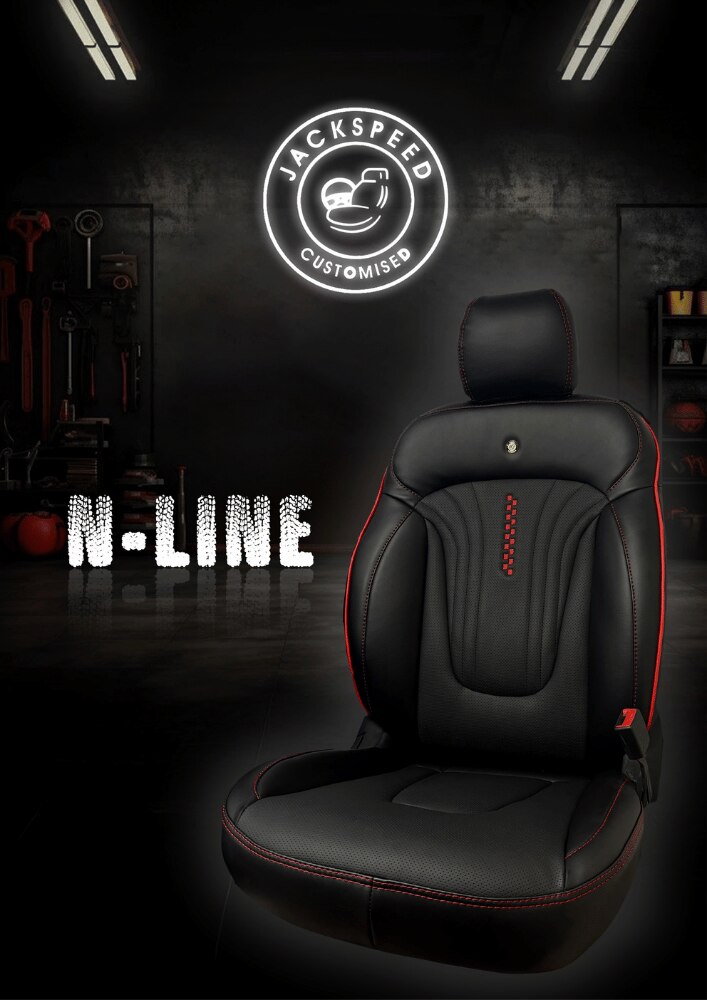 | Custom Car Seat Covers N-LINE Customised Car Seat Covers Jackspeed N-LINE Customised Car Seat Covers feature a predominantly black design with red contrast detailing and a sculpted centre section. View product → |
Frequently asked questions
What is the difference between upholstery, fitted covers and universal slip-ons?
Replacement upholstery removes the factory seat skin and installs new material on the foam. Vehicle-patterned fitted covers go over the original upholstery and follow the seat’s bolsters, controls, headrests and folding sections. Universal slip-ons use broad shapes, so they install faster but are more likely to move, crease or obstruct access.
How can I tell genuine leather from PU, PVC or leatherette in a Delhi quotation?
Ask the seller to state the material on the written quotation, including whether it is full-grain, corrected-grain, split leather, PU, PVC or a fabric-backed synthetic. Check which panels use leather and which use synthetic material; a quote that only says “leather cover” does not identify the composition.
Will an N LINE pattern fit my exact car and remain safe?
Give the installer the exact make, model, variant, model year and seat configuration. Confirm that the pattern allows the side-airbag deployment path, seat controls, headrests, seat belts and folding sections to work without restriction. Do not accept a cover that hides or compresses an airbag seam.
What should a proper custom-cover installation look like at handover?
The covers should sit tight across the seat and bolsters without loose fabric, shifting wrinkles or blocked controls. Check headrest movement, seat travel, belt buckles, rear-seat folding, ISOFIX access and any side-airbag markings before payment. The installer should return removed parts and explain care instructions.
Which seat-cover choice makes sense for Delhi driving and daily use?
Choose fitted custom seat covers when you want protection, a vehicle-specific fit and easier replacement than full reupholstery. Choose replacement upholstery when the original foam or upholstery needs a complete restoration. Choose a universal slip-on only when speed and low initial effort matter more than fit, appearance and access.
Keywords