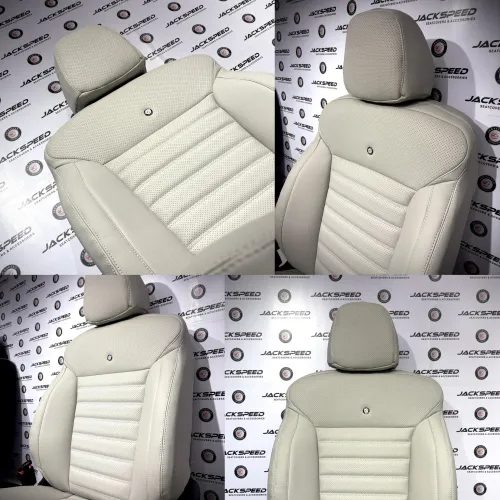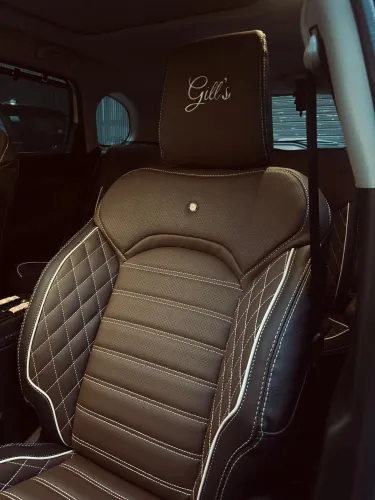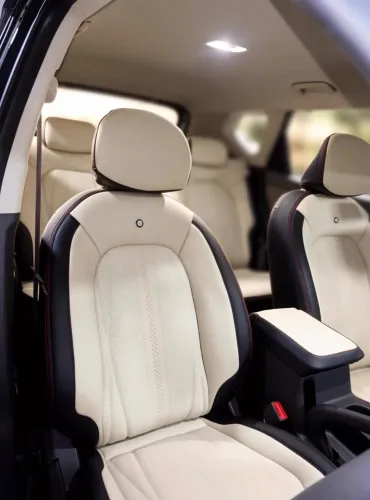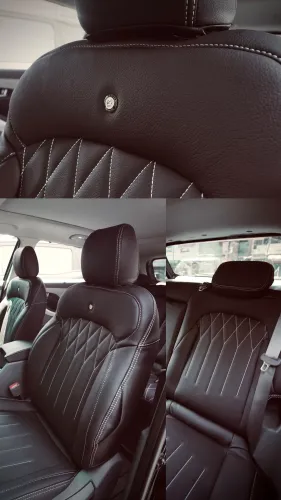
A bucket-fit cover that wrinkles, blocks a buckle or restricts seat movement is not ready for use, even when the upholstery looks covered. You will be able to identify the seat shape, check the order measurements, separate an installation error from a pattern mismatch and complete a functional inspection before accepting the fitment.
Key takeaways
- Confirm the seat shape before ordering a contoured bucket-fit cover.
- Send seat measurements, control locations and clear photos with your order.
- Test belts, recline movement, controls and head restraints after installation.
- Ask for a Delhi inspection when the cover remains loose after correct refitting.
Is your seat actually suited to a bucket-fit cover?
| Seat type | What it means | Pattern consequence |
|---|---|---|
| True bucket seat | A separate seat with its own cushion, backrest and pronounced side support | Needs an individual contoured cover |
| Standard front seat with bolsters | A conventional front seat with shaped side edges, often less deeply formed | Needs openings for controls, belts and head restraints |
| Reclining seat | A front seat whose backrest changes angle on a hinge | The cover must follow the hinge and preserve full recline travel |
| Split rear bench | One rear row divided into separately folding sections | Each section needs its own seams, releases and attachment points |
| One-piece rear seat | A single cushion or backrest folding as one unit | Requires a continuous pattern without split-seat openings |
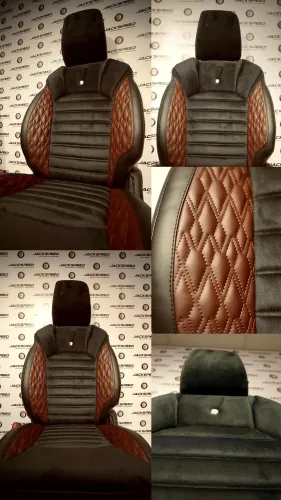
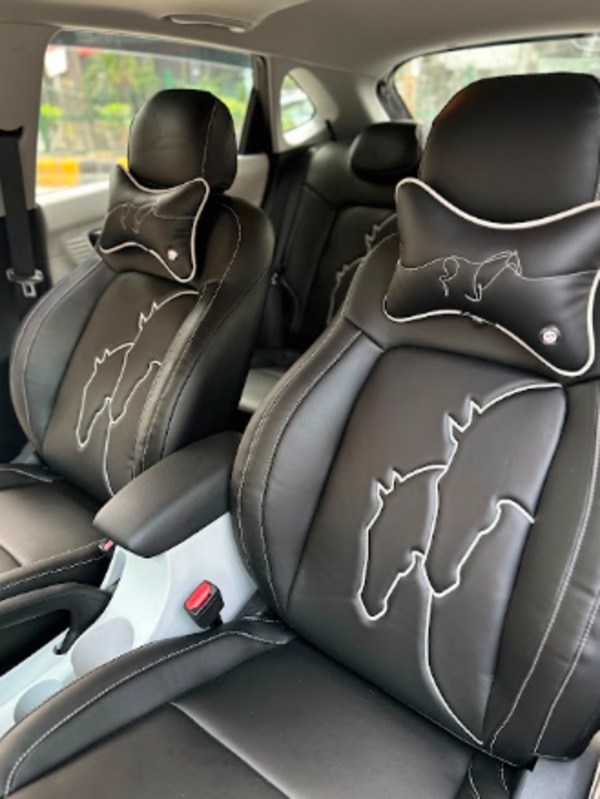
Bucket-fit means following the contours of one individual seat; it does not mean placing a universal cover over any front seat. The required pattern changes with the model year, facelift version, trim, captain’s chairs or bench seating, fixed or removable head restraints, armrests, folding mechanisms and integrated controls.
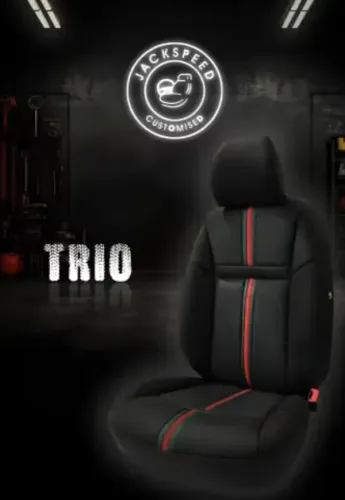
Before ordering trio car seat covers, define “trio”. It might mean a three-piece package, a three-seat grouping or simply a seller’s product name. Confirm whether trio customised car seat covers include headrests, armrests and rear seats, and ask exactly which three pieces or seats are covered.
A broad vehicle name is not enough when seat rows or factory controls differ.
What measurements and photos prevent a wrong bucket-fit order?
Measure the actual seats before ordering; a broad vehicle model name cannot distinguish trims with different seat rows, airbags, controls or head restraints. These checks prevent bucket fit car seatcovers problems and make a seller’s pattern review more reliable.
- Record seat-base width at the front and rear, seat-base depth, backrest height and width, and bolster thickness.
- Note each head-restraint’s shape and count, including fixed, removable or integrated designs.
- Mark every seat-belt-buckle position, armrest location and clearance around adjustment levers, seat rails, reclining hinges and power controls.
- Identify the rear seat as one-piece, split-fold or fitted with fold-down releases; record where each release sits.
- Photograph the front and rear of every seat, with the seats upright and the head restraints installed. Include close photos of buckles, armrests, controls, hinges and release handles.
| Option | Fit and installation | Main risk |
|---|---|---|
| Universal bucket cover | Faster installation and more tolerance for measurement errors | Excess fabric near buckles, rails, hinges or controls |
| Vehicle-patterned customised cover | Closer contour fit with less movement and a cleaner finish | A wrong year, trim or seat variant leaves little tolerance for correction |
Use this same evidence when comparing bucket fit seat covers in delhi. A customised pattern can fit better than a universal cover, but only when the measurements, photographs and vehicle variant match; do not order from the model name alone.
How do you tell a sizing fault from a bad installation?
Loose fabric alone does not prove a sizing fault. Diagnose bucket fit car seatcovers problems in this order:
1. Remove the cover; do not force a buckle opening, lever slot or head-restraint hole. Inspect for twisted elastic, misplaced straps, material trapped under the cushion, wrongly routed hooks and seams sitting off-centre.
2. Refit from the seat centre outward. Release trapped fabric, attach each fastener to its intended point and smooth the cushion before tightening. Base wrinkling, loose fabric and a cover that rides up often disappear at this stage.
3. Test the dimensions. Persistent pulling across the backrest, exposed upholstery, excess slack or seams opening across the correct attachment points indicates a pattern or sizing mismatch, not poor installation. Check both the cushion and backrest rather than judging the cover from one area.
4. Move the seat through its full fore-aft, height and recline travel. Stop immediately if a hook, strap or panel obstructs a rail, lever, buckle, hinge or other moving part. A blocked adjustment path is unsafe, even when the cover looks smooth.
5. Check every buckle. If the cover hides it, pulls it sideways, narrows its opening or makes the belt twist, remove and refit it rather than cutting a larger slit.
A corrected cover that becomes smooth and functional had an installation problem. If the same faults remain after proper attachment, the Trio car seat covers pattern or seat variant is wrong.
Which functional checks must pass after fitment?
Acceptance requires more than a smooth appearance: the cover must remain secure and every seat function must work.
- Press down on each cushion. The cover should contact it smoothly, stay down when occupied, and keep seams and zippers under even tension.
- Expose the correct head-restraint openings, then confirm every restraint locks at its intended positions.
- Operate every adjustment lever. Move each front seat through its full fore-aft, height and recline range; no material may enter the rails or tracks.
- Latch every belt without twisting or binding. Fold and relatch the rear seats, and confirm every split-seat release remains accessible.
- Stop if loose fabric, wrinkling, buckle interference or a pulled backrest appears. These are bucket fit car seatcovers problems, not finishing details.
| Check | Pass condition | Failure consequence |
|---|---|---|
| Cushion and backrest | Smooth contact; no sideways pull when occupied | Exposed upholstery, shifting cover or opened seams |
| Seat movement | Full travel without catching or trapped material | Restricted adjustment or damaged track |
| Side-airbag seam | Correct outer side, deployment path and seat-specific construction | A generic slit can obstruct or tear unpredictably |
| Occupant sensor area | Cover follows the maker’s sensor-clearance instructions | Pressure or weight readings may change |
Seat-mounted side airbags deploy through a marked outer-backrest seam. Confirm compatibility for the correct side and seat design; a slit alone proves nothing. Keep child restraints on the vehicle seat unless both vehicle and restraint instructions specifically permit the cover.
When should you refit, reorder or ask a Delhi installer to inspect the cover?
Refit the cover when the fault is a twisted strap, loose attachment, centred seam, or fabric trapped under the cushion. Remove it before correcting the routing; forcing a buckle, lever, rail or hinge through a tight opening can create a more serious obstruction.
| Next action | Choose it when | What to confirm |
|---|---|---|
| Refit | The seat becomes smooth and functional after repositioning straps, hooks or fabric | No wrinkles, riding-up, blocked movement or buckle interference |
| Reorder or request a pattern review | Correct installation still pulls the backrest sideways, prevents full recline, exposes upholstery, blocks a split-seat release or leaves a buckle misaligned | Recheck model year, trim, seat layout, head restraints, armrests and measurements |
| Ask a Delhi installer to inspect | The fit remains uncertain, especially around power controls, sliding tracks, airbags or sensors | Have the seat operated through its full travel before use |
For bucket fit seat covers in Delhi, choose wipe-clean leatherette for easier dust and spill care, but expect more heat after direct sun and watch for surface cracking. Breathable fabric or mesh feels cooler and needs its own cleaning method rather than harsh wiping.
A provider such as Jackspeed can compare vehicle details, seat photographs and measurements to confirm whether a TRIO customised car seat covers pattern fits or another design is better. TRIO is a product name, not a safety standard.
Ask for the exact side-airbag seam, deployment path and occupant-sensor clearance; a generic “airbag compatible” claim or slit proves nothing.
Related product
 | Custom Car Seat Covers TRIO Customised Car Seat Covers Jackspeed TRIO Customised Car Seat Covers feature a predominantly black design with a distinctive three-colour centre stripe running through the... View product → |
Frequently asked questions
Is every contoured front seat suitable for a bucket-fit cover?
No. A true bucket seat needs an individual contoured cover, while a standard front seat with bolsters needs openings for controls, belts and head restraints. Check the seat shape and movement before ordering.
What should you measure and photograph before ordering bucket-fit car seatcovers?
Measure the cushion width and depth, backrest width and height, bolster depth, and head-restraint position. Photograph the front, rear, sides, hinges, controls, seat-belt receiver and head restraints in clear, well-lit images.
How can you tell a sizing fault from a bad installation?
Refit the cover from the seat centre outward and check its seams, straps, hooks and closure points. If the same gap, wrinkle or blocked opening remains after correct tensioning, compare the cover with your measurements and contact the supplier.
Which checks must pass after bucket-fit cover installation?
Confirm that the seat belt and buckle move freely, the backrest reclines through its full range, seat controls operate without catching, head restraints move correctly and no seam interferes with airbags or hinges.
When should you refit, reorder or ask a Delhi installer to inspect the cover?
Refit when straps, hooks or seams are misaligned. Reorder when the measured seat dimensions or shape do not match the supplied pattern. Ask an installer to inspect it when the cover still shifts, blocks a control or leaves a persistent mismatch after refitting.
Keywords