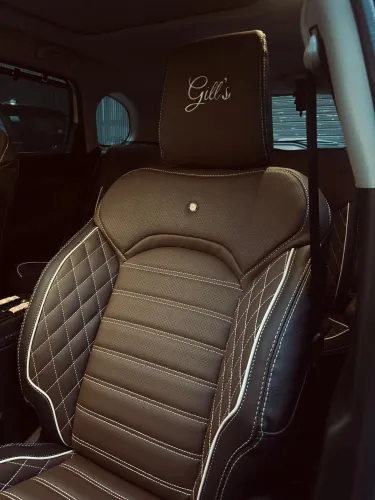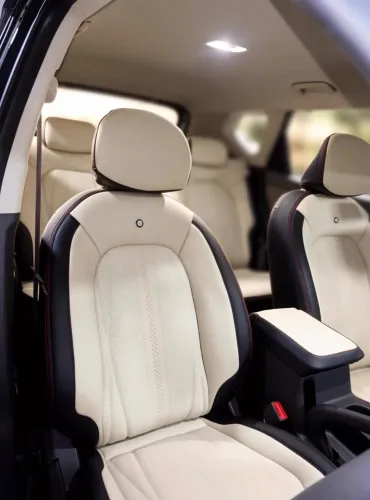
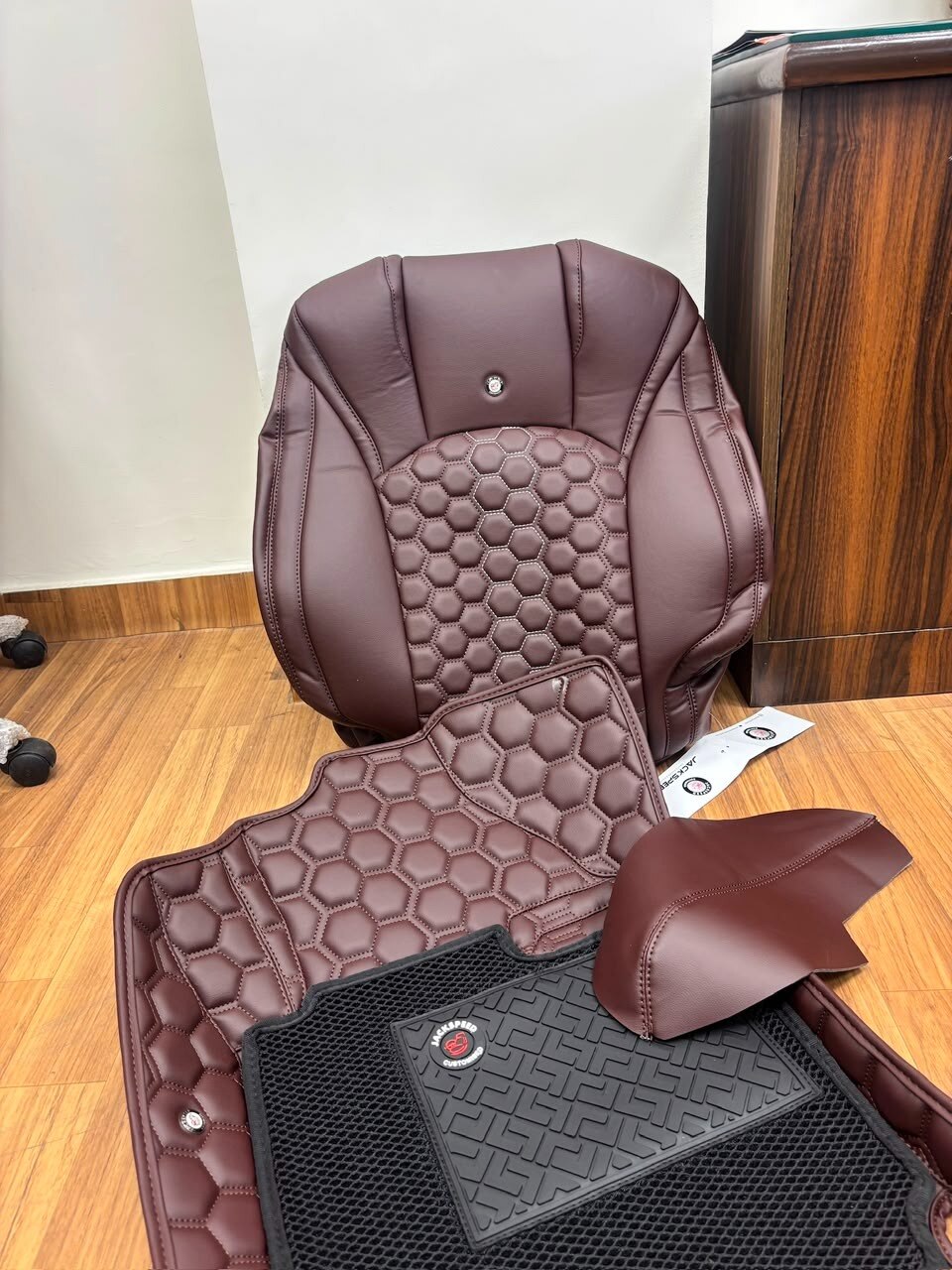
A sporty black-and-red seat cover is easy to recognise, but harder to judge: the panel layout, stitching, materials and airbag seams determine whether it is a well-fitted interior upgrade or a generic overlay. By the end, you will know how to verify vehicle compatibility, inspect safety and comfort details, compare materials, and choose a design that suits daily driving rather than appearance alone.
Key takeaways
- Match the cover to your exact vehicle, seat layout and side-airbag position.
- Reject covers that obstruct seat-mounted airbags, controls, belts or head restraints.
- Choose breathable materials and plan regular cleaning for Delhi’s heat and dust.
- Use stitching, piping and colour accents that complement your existing cabin.
How to tell a genuine N Line-style fit from a generic black-and-red cover
Colour is the weakest test: a genuine N Line-style fit follows the original seat’s geometry, while a generic black-and-red cover usually relies on colour and contrast alone. N Line covers are aftermarket unless supplied with the vehicle, so the badge does not prove correct fit or safety compatibility.
1. Compare the panel layout with the seat. Look for separate bolsters, a shaped centre section, matching front and rear contours, and cut-outs for the headrests, armrests and belt buckles. A loose one-piece shell that bunches across the seat base is generic, regardless of its logo.
2. Inspect the centre section. Sportier designs commonly combine perforated or textured material with smoother side bolsters, rather than adding red fabric to a flat black panel. Perforations should stop cleanly at seams and remain evenly spaced; stretched holes or wavy edges indicate poor patterning.
3. Check the stitching and piping. Consistent double rows, tight corners, symmetrical red piping and reinforced stress points show that the cover was patterned for that seat. Decorative red thread on an unshaped cover is only surface styling.
4. Examine the outer seatback. It needs a purpose-made airbag deployment seam, not a random slit or tightly trapped edge. The cover must also leave seat rails, buckles, ISOFIX or LATCH points and controls accessible.
For anyone comparing N Line sporty car seat covers in Mayapuri, ask for the exact vehicle make, model year, variant and seat configuration before judging the design. A convincing red-and-black finish cannot compensate for the wrong seat geometry.
Check the vehicle and seat configuration before you order
Confirm the exact make, model, model year, body style and variant before ordering n line customised car seat covers. A badge or “N Line” styling label does not guarantee matching seat geometry. Check whether the vehicle has two or three rows, heated or ventilated seats, electric controls, side airbags, armrests and removable head restraints.
Ask the seller or installer to confirm:
- Front-seat cushion and backrest width, length, height, contours and foam compression on each seat.
- Head-restraint shape, post spacing, adjustment range and whether the posts pass through the cover.
- Rear-seat split ratio, folding direction, centre armrest, head restraints and seat-belt positions.
- Seat-rail clearance, recline levers, power switches, belt buckles and ISOFIX or LATCH anchor access.
- Existing tears, stains, collapsed foam or faulty controls, with photographs taken before fitting. A cover hides damage; it does not repair a frame or restore foam.
Custom does not always mean individually measured. Ask which process is included for custom car seat covers for drivers:
| Process | What is checked | Main limitation |
|---|---|---|
| Vehicle-specific template | The listed make, model, year and seat variant | It may miss worn foam or unusual trim |
| Individual measurement | Each seat’s contours, controls, trim and compression | It takes more fitting time |
Reject any order that identifies only the car brand and colour. Similar variants can use different front mounting points, rear splits or belt positions, creating a cover that looks sporty but blocks a function.
What a proper installation must preserve
A proper fitting preserves safety equipment and every seat movement, not just a tight appearance. Before installing custom car seat covers for drivers, the installer should photograph tears, stains, collapsed foam and faulty controls; a cover hides these defects but cannot repair foam or a damaged frame.
1. Confirm whether the job uses individually measured seats or a vehicle-specific template. True custom work accounts for foam compression, contours, controls and trim; “semi-custom” does not necessarily do so.
2. Record the vehicle’s exact make, model, year, variant and seat layout. Match front-seat shape, headrests, armrests, rear-seat split, folding mechanism and belt-buckle positions before removing anything.
3. Remove the existing covers carefully and inspect seat-mounted side airbags, SRS wiring and sensors. Use covers with a deliberately engineered airbag deployment seam; ordinary closed stitching across an airbag outlet can delay or redirect deployment.
4. Check that the cover has openings or clearance for seat-belt buckles, ISOFIX anchorage points, headrest posts, seat controls, ventilation and heating. Do not accept a hidden buckle or a slit that forces the belt across the cover.
5. Before payment, test full seat travel, recline, headrest adjustment, rear-seat folding and child-seat access. Start the car and confirm that no SRS warning light appears.
Ask for the installation time, removal and refitting terms, and written confirmation of airbag compatibility. The N Line badge alone proves neither correct seat geometry nor factory-level safety compatibility.
Balance Delhi heat, comfort and long-term maintenance
A perforated centre panel or breathable fabric insert is the practical starting point for Delhi’s heat. A fully dark, non-breathable synthetic surface can become painfully hot after sun exposure, while a lighter centre section, UV-resistant material and ventilated construction reduce heat and fading.
| Material | Daily-use advantage | Check before ordering |
|---|---|---|
| Fabric or mesh centre | Cooler contact surface and quicker heat release | Confirm abrasion resistance and whether the fabric is removable for washing |
| Perforated leatherette | Sporty appearance with airflow through the centre panel | Inspect hole spacing, backing quality and cleaning instructions; cheap perforations can split |
| Leatherette bolsters with fabric centre | Wipes clean where you slide in, while the centre remains less clammy | Check that the transition seam is flat and reinforced |
| Full leatherette | Strong spill resistance and a uniform finish | Expect a hotter surface; reject thin material with weak foam backing |
“Premium seat covers in delhi” is a marketing phrase, not a material grade. Ask for the composition, backing thickness, UV resistance, seam construction, warranty exclusions and whether removal or refitting is covered.
Choose polyester or a blended fabric with tight stitching for the centre section, and avoid glossy PVC that traps heat. Confirm that the cleaning method will not damage colour or perforations.
Inspect the finished fit after installation: seat-belt buckles, rails, ISOFIX points and controls must remain clear, and any side-airbag deployment seam must be purpose-stitched rather than hidden beneath decorative piping. A sporty cover that needs constant adjustment or traps dust at its seams is not practical for daily driving.
Choose the design that suits the rest of your cabin
Match the cover to the cabin’s existing visual language, not just the colour you like in a product photo. Check the dashboard trim, door inserts, steering-wheel finish and floor mats; a heavily contrasted cover can look out of place once fitted.
| Option | What it communicates | Best choice when |
|---|---|---|
| N-LINE | Factory-inspired, restrained sportiness | You want a cohesive cabin and easier resale appeal |
| Minimal sporty design | Subtle texture, piping or perforation | The car is used by family members and must suit different tastes |
| Bold contrast design | Strong colour blocks and prominent accents | You accept a louder appearance and plan to keep the car long term |
For sporty car interiors in Mayapuri, inspect a physical sample beside your cabin trim rather than judging colour on a phone screen. Ask whether the colour is built into the material or added as surface treatment, because worn piping and faded panels become obvious on a family-used car.
Listings for premium seat covers in Delhi describe positioning, not a defined grade. Compare material composition, cleaning instructions, warranty exclusions and whether removal leaves the original upholstery presentable. A reversible, vehicle-specific design usually protects resale better than permanent alterations.
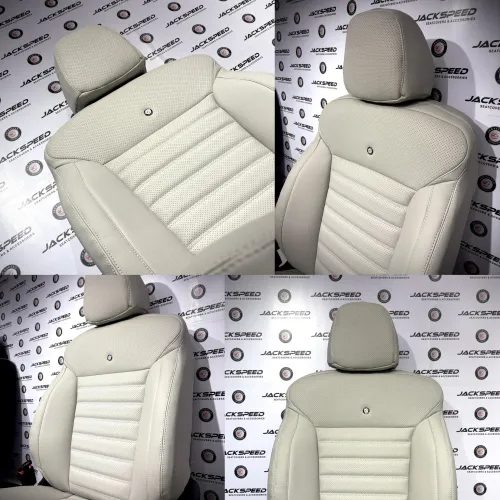
If you are comparing Jackspeed designs, judge the panel geometry and accent colour against your cabin before choosing between N-LINE and a more conspicuous pattern. Choose the quieter option when resale matters more than personal expression.
Related product
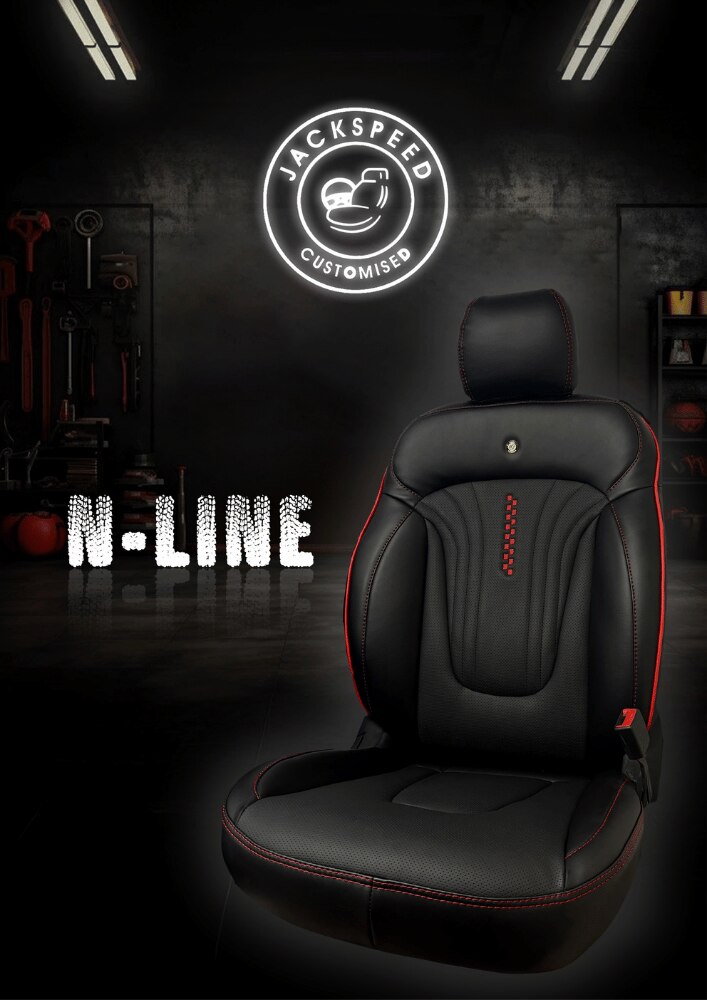 | Custom Car Seat Covers N-LINE Customised Car Seat Covers Jackspeed N-LINE Customised Car Seat Covers feature a predominantly black design with red contrast detailing and a sculpted centre section. View product → |
Frequently asked questions
How can you tell a genuine N Line-style fit from a generic black-and-red cover?
Check whether the cover follows the original seat’s contours, openings, head restraints, controls and airbag zones. Colour alone does not prove a vehicle-compatible fit.
What vehicle and seat details should you check before ordering?
Confirm the make, model, variant, model year, seat count, split-fold arrangement, head-restraint design, armrests, rear-seat configuration and seat-mounted airbag locations.
What must a proper seat-cover installation preserve?
Installation must leave seat-mounted airbag deployment paths, seat-belt buckles, adjustment controls, head restraints and folding functions unobstructed.
How should you choose seat covers for Delhi heat and long-term maintenance?
Compare ventilation, heat retention, dust resistance, cleaning requirements and material durability. Select a surface that stays comfortable in heat and can be cleaned without damaging the upholstery.
Keywords